GiverBlikk
Veiledning for bedre giverbrev
Her står teorien bak vurderingen. Hvordan en giver leser et brev, hva brevet må få sagt, og hvordan du skriver det slik at det blir lest.
Hvordan leser en giver innsamlingsbrevet?
Det finnes ikke ett svar på hvor lenge en giver bruker på brevet ditt. Noen skummer på sekunder, andre leser hver linje. Hvor langt hun kommer, avhenger av hvordan brevet er utformet, hvilke bilder det har og hvilke ord det bruker.
Les artikkelen →2 min å lese
Problem, løsning og pengenes vei i giverbrevet
Før du skriver et ord, bør du kunne svare på tre ting. Hva er problemet? Hva er løsningen? Og hvordan blir giverens penger til løsningen? Svarer ikke brevet klart på dem, er det ikke klart til å sendes.
Les artikkelen →2 min å lese
Slik skriver du historien om ett menneske i giverbrevet
Et problem blir først virkelig når giveren møter ett menneske som har det. Derfor bør giverbrevet handle om én person, ikke om mange og ikke om organisasjonen.
Les artikkelen →1 min å lese
Bilder i giverbrev som virker
Et bilde kan bære hele historien, eller ødelegge den. Det sier mer enn tusen ord, og kan derfor tolkes på tusen måter.
Les artikkelen →1 min å lese
Du-perspektivet i giverbrev og BOY-regelen
Et giverbrev som handler om organisasjonen, gir giveren lite å gjøre. Et brev som handler om hva hun får til, gir henne en grunn til å gi.
Les artikkelen →1 min å lese
KI-språk i giverbrev, og slik rydder du det bort
KI trekker mot gjennomsnittet. Et giverbrev som er glattet ut til gjennomsnittet, mangler en person, og da må mennesket være motvekten.
Les artikkelen →1 min å lese
Sjekkliste før du sender giverbrevet
En sjekkliste fanger det du ikke ser selv, fordi du kjenner brevet for godt. Gå gjennom den med friske øyne.
Les artikkelen →2 min å lese
Slik vurderer GiverBlikk giverbrevet
GiverBlikk gir tilbakemelding på giverbrev før de sendes. Her er teorien bak vurderingen, og hva den kan og ikke kan si deg.
Les artikkelen →2 min å lese


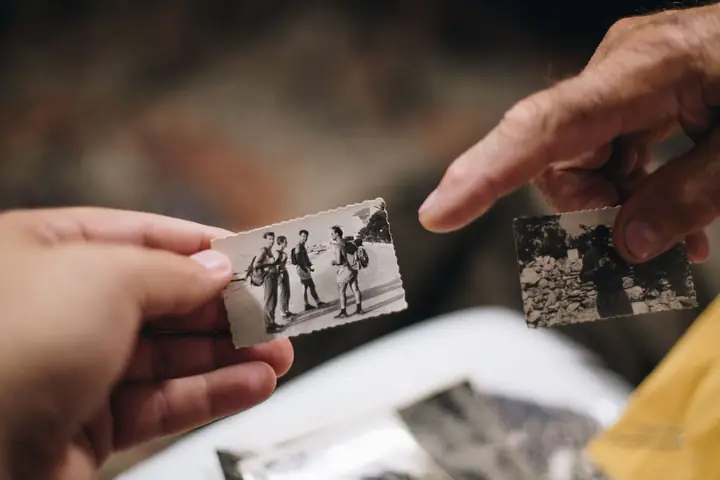



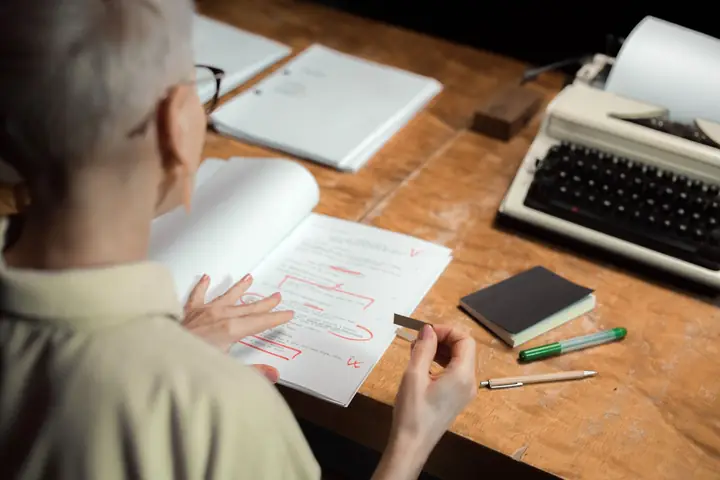
Se hva en skumleser trolig får med seg
Last opp giverbrevet, så viser GiverBlikk hvor blikket trolig stopper, hva som mangler og det viktigste grepet for å løfte brevet. Første vurdering er gratis.
Last opp brevetForskning og fagstoff
Forskningen, bøkene og fagsidene bak veiledningen, samlet på ett sted. Hver artikkel viser sine egne.
Forskning
- Duggan, G. B., & Payne, S. J. (2009). Text skimming: The process and effectiveness of foraging through text under time pressure. Journal of Experimental Psychology: Applied, 15(3), 228–242. doi.org/10.1037/a0016995
- Pieters, R., & Wedel, M. (2004). Attention capture and transfer in advertising: Brand, pictorial, and text-size effects. Journal of Marketing, 68(2), 36–50. doi.org/10.1509/jmkg.68.2.36.27794
- Cryder, C. E., Loewenstein, G., & Scheines, R. (2013). The donor is in the details. Organizational Behavior and Human Decision Processes, 120(1), 15–23. doi.org/10.1016/j.obhdp.2012.08.002
- Bekkers, R., & Wiepking, P. (2011). A literature review of empirical studies of philanthropy: Eight mechanisms that drive charitable giving. Nonprofit and Voluntary Sector Quarterly, 40(5), 924–973. doi.org/10.1177/0899764010380927
- Small, D. A., Loewenstein, G., & Slovic, P. (2007). Sympathy and callousness: The impact of deliberative thought on donations to identifiable and statistical victims. Organizational Behavior and Human Decision Processes, 102(2), 143–153. doi.org/10.1016/j.obhdp.2006.01.005
- Kogut, T., & Ritov, I. (2005). The “identified victim” effect: An identified group, or just a single individual? Journal of Behavioral Decision Making, 18(3), 157–167. doi.org/10.1002/bdm.492
- Lee, S., & Feeley, T. H. (2016). The identifiable victim effect: A meta-analytic review. Social Influence, 11(3), 199–215. doi.org/10.1080/15534510.2016.1216891
- Merchant, A., Ford, J. B., & Sargeant, A. (2010). Charitable organizations' storytelling influence on donors' emotions and intentions. Journal of Business Research, 63(7), 754–762. doi.org/10.1016/j.jbusres.2009.05.013
- Small, D. A., & Verrochi, N. M. (2009). The face of need: Facial emotion expression on charity advertisements. Journal of Marketing Research, 46(6), 777–787. doi.org/10.1509/jmkr.46.6.777
- Genevsky, A., Västfjäll, D., Slovic, P., & Knutson, B. (2013). Neural underpinnings of the identifiable victim effect: Affect shifts preferences for giving. The Journal of Neuroscience, 33(43), 17188–17196. doi.org/10.1523/JNEUROSCI.2348-13.2013
- Hutton, S. B., & Nolte, S. (2011). The effect of gaze cues on attention to print advertisements. Applied Cognitive Psychology, 25(6), 887–892. doi.org/10.1002/acp.1763
- Arango, L., Singaraju, S. P., & Niininen, O. (2023). Consumer responses to AI-generated charitable giving ads. Journal of Advertising, 52(4), 486–503. doi.org/10.1080/00913367.2023.2183285
- Andreoni, J. (1990). Impure altruism and donations to public goods: A theory of warm-glow giving. The Economic Journal, 100(401), 464–477. doi.org/10.2307/2234133
- Dunn, E. W., Aknin, L. B., & Norton, M. I. (2008). Spending money on others promotes happiness. Science, 319(5870), 1687–1688. doi.org/10.1126/science.1150952
- Aaker, J. L., & Akutsu, S. (2009). Why do people give? The role of identity in giving. Journal of Consumer Psychology, 19(3), 267–270. doi.org/10.1016/j.jcps.2009.05.010
- Doshi, A. R., & Hauser, O. P. (2024). Generative AI enhances individual creativity but reduces the collective diversity of novel content. Science Advances, 10(28), Article eadn5290. doi.org/10.1126/sciadv.adn5290
- Ji, Z., Lee, N., Frieske, R., Yu, T., Su, D., Xu, Y., Ishii, E., Bang, Y. J., Madotto, A., & Fung, P. (2023). Survey of hallucination in natural language generation. ACM Computing Surveys, 55(12), 1–38. doi.org/10.1145/3571730
- De Bruyn, A., & Prokopec, S. (2013). Opening a donor's wallet: The influence of appeal scales on likelihood and magnitude of donation. Journal of Consumer Psychology, 23(4), 496–502. doi.org/10.1016/j.jcps.2013.03.004
- Weyant, J. M., & Smith, S. L. (1987). Getting more by asking for less: The effects of request size on donations of charity. Journal of Applied Social Psychology, 17(4), 392–400. doi.org/10.1111/j.1559-1816.1987.tb00320.x
- Oppenheimer, D. M. (2006). Consequences of erudite vernacular utilized irrespective of necessity: Problems with using long words needlessly. Applied Cognitive Psychology, 20(2), 139–156. doi.org/10.1002/acp.1178
- Tausczik, Y. R., & Pennebaker, J. W. (2010). The psychological meaning of words: LIWC and computerized text analysis methods. Journal of Language and Social Psychology, 29(1), 24–54. doi.org/10.1177/0261927X09351676
- Anderson, J. (1983). Lix and Rix: Variations on a little-known readability index. Journal of Reading, 26(6), 490–496. eric.ed.gov/?id=EJ276209
Bøker
- Vögele, S. (1992). Handbook of direct mail: The dialogue method of direct written sales communication. Prentice Hall. books.google.com/books?vid=ISBN0132087456
- Ahern, T. (2007). How to write fundraising materials that raise more money: The art, the science, the secrets. Emerson & Church. books.google.com/books?vid=ISBN9781889102313
- Brooks, J. (2012). The fundraiser's guide to irresistible communications: Real-world, field-tested strategies for raising more money. Emerson & Church. books.google.com/books?vid=ISBN9781889102023
- Burnett, K. (2002). Relationship fundraising: A donor-based approach to the business of raising money (2nd ed.). Jossey-Bass. libris.kb.se/bib/11895649
- Björnsson, C.-H. (1968). Läsbarhet [Readability]. Liber. libris.kb.se/bib/8079176
Fagsider og eksempler
- Nielsen, J. (1997, September 30). How users read on the web. Nielsen Norman Group. www.nngroup.com/articles/how-users-read-on-the-web/
- Pernice, K. (2017, November 12). F-shaped pattern of reading on the web: Misunderstood, but still relevant (even on mobile). Nielsen Norman Group. www.nngroup.com/articles/f-shaped-pattern-reading-web-content/
- Huntsinger, J. (2019, February 28). Tutorial 1: Creating fundraising letters and packages. SOFII. sofii.org/article/tutorial-1-creating-fundraising-letters-and-packages
- Dóchas. (2023). Dóchas guide to ethical communications. dochas.ie/resources/ethical-communications/guide-to-ethical-communications/
- Bond. (2024). Putting the people in the pictures first: Guidelines for the ethical production and use of content (images and stories) [Updated version]. www.bond.org.uk/wp-content/uploads/2024/11/Digital_Ethical-Guidelines_FINAL.pdf
- Fundraising Norge. (2025). Bildebruk i fundraising i Norge: En anbefaling fra Fundraising Norge for etisk bruk av bilder i fundraisingarbeid i Norge [Image use in fundraising in Norway: A recommendation from Fundraising Norway for the ethical use of images in fundraising]. fundraisingnorge.no/content/uploads/2025/01/Etisk-bildeveileder-for-Fundraising-Norge.pdf
- Fundraising Regulator. (2025). Code of fundraising practice. www.fundraisingregulator.org.uk/code
- Fundraising Norge & Innsamlingskontrollen. (2023). Etiske retningslinjer for innsamling i Norge [Ethical guidelines for fundraising in Norway]. www.innsamlingskontrollen.no/wp-content/uploads/2023/04/Etiske-Retningslinjer-2023.pdf